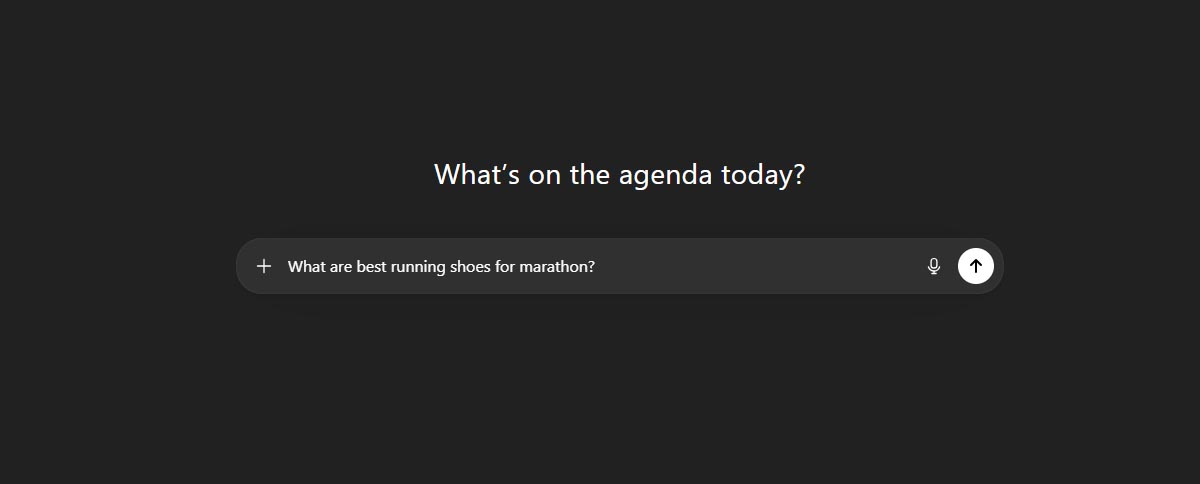
According to Sam Altman, the CEO of OpenAI, ChatGPT has weekly active users of more than 800 million as of September 2026. What this means for e-commerce businesses is that there is a high potential of getting more visibility, building trust, getting traffic, and making sales when people search for what they sell in ChatGPT. If you are an e-commerce business owner, this makes the need for you to learn how to rank your products on ChatGPT and other AI models.
This basically means showing up when someone types “best vacuum cleaner for offices” or “recommended vacuum cleaner for marble tiles” into ChatGPT.
The benefit of being the one ChatGPT recommends goes beyond visibility or traffic; it basically builds trust with those ChatGPT users because it signals that the vacuum cleaner you sell is of high quality.
By the end, you’ll know exactly how to optimize your product so ChatGPT recommends it to potential customers in the first answer it gives them.
What Does ChatGPT Product Ranking Mean & Its Importance to Your Product?
ChatGPT product ranking refers to how generative AI like ChatGPT recommends, mentions, or suggests your product when users ask questions relevant to the products you sell.
Unlike traditional search engines like Google that show a list of links with brief descriptions and images, ChatGPT provides direct product recommendations in conversational responses.
It’s just like when someone searches Google for “the best ergonomic standing desk for a small office?” or “Where can I buy a durable, waterproof pet bed?” They get several blue links to click through. When they ask ChatGPT the same question, they get a curated response that might mention 3-6 specific standing desks or waterproof pet bed stores with explanations of why each one is a great choice.
Why ChatGPT Product Visibility is Important to Your Product
High Buying Intent
In most cases, when people ask ChatGPT for product recommendations, they are usually ready to buy. They’re seeking specific solutions to their problems and not just browsing. So ranking means high buying potential for your product.
Growing Market Share
While Google still dominates search, ChatGPT and similar AI models are rapidly getting more users. If you optimize your product descriptions for AI now, even at this early phase, you will have a significant advantage and better market share as this trend advances.
Direct Recommendations With Less Competition
Unlike Google, where you compete for attention with ads, featured snippets, and ten other organic results, ChatGPT typically recommends a few products. If you’re one of them, you have the user’s full attention. Hence, the competition is less.
Cost-Effective Visibility
Unlike paid ads that require constant financial investment, optimizing for AI ranking requires significantly less investment effort and delivers the needed results.
Builds Trust
AI recommendations carry significant weight with users. When ChatGPT suggests your vacuum cleaner, it comes with a “suggested” credibility that regular ads can’t give.
How ChatGPT Ranks Products Differently From Google
If you’ve tried SEO on Google, Bing, or other search engines, you know it’s focused on things like:
- On-page keyword optimization
- Backlink quantity and quality
- Mobile responsiveness
- User engagement metrics
- Page loading speed
Google basically shows you a list of websites, and you decide which to visit based on titles, descriptions, and rankings.
ChatGPT’s ranking system operates differently by combining advanced training data with real-time data retrieval (from sources like Bing or its own search crawler). It basically includes:
- Training data that includes web content, reviews, and discussions
- Real-time web searches (in some versions)
- Patterns about what products are frequently mentioned together
- Credible, factual information about products
- Structured data that AI can easily interpret
ChatGPT prioritizes relevance, credibility, and clarity over the regular SEO factors. It looks for:
- Factual accuracy: Is the information about your product consistent across multiple sources?
- Authority signals: Is your product mentioned on reputable websites, forums, and review platforms?
- Structured information: Can AI easily extract key details like pricing, features, and specifications?
- Genuine social proof: Are there verified reviews of real user experiences?
- Recency: Is the product information current and up-to-date?
This means you need to think less about keyword density and more about creating clear, factual, authoritative product information that ChatGPT or other AI models can clearly recommend.
| Ranking Factor | Traditional Google SEO | AI (ChatGPT) Ranking |
| Goal | Ranking Pages: To deliver a list of relevant links. | Generating Answers: To deliver a single, comprehensive, and helpful text response. |
| Authority Focus | Backlinks & Domain Age (the number of reputable sites that link to you) | Credibility & Citation Frequency: How often you are mentioned accurately in high-quality, structured, and fact-rich content across the web (backlink in another way). |
| Content Priority | Keywords & Topical Depth: Content that covers a topic thoroughly. | Clarity & Extractable: Content that is easily summarized, factual, uses lists/tables, and directly answers user questions (specifications, size, warranty). |
| Data Format | HTML Text: Reads the entire page content. | Structured Data (Schema): Prioritizes machine-readable data for fast, accurate fact-extraction. |
How to Rank Your Product on ChatGPT (8 Strategies)
1. Create Factual, Data-Driven Product Descriptions
Ranking your product on ChatGPT starts with the content of your product descriptions. Your product pages should not be generic marketing copy but a rich database of helpful decision-making information about the product.
Focus on Specifications and Important Product Details
AI models prefer specific, measurable product information where accurate specifications are provided.
Examples
Weak description: “Our wireless earbuds deliver exceptional audio quality and long battery life, perfect for music lovers on the go.”
Strong description: “These wireless earbuds feature 40mm neodymium drivers with a frequency response of 20Hz-20kHz, Active Noise Cancellation up to 30dB, and 8 hours of playback time on a single charge (32 hours with charging case). They support Bluetooth 5.2 with a range of 10 meters and include IPX4 water resistance.”
The second description gives AI systems relevant data points to reference when recommending products. When someone asks ChatGPT about wireless earbuds with good battery life, the AI can confidently cite the 8-hour specification and recommend your earbuds.
Highlight Real Benefits with Supporting Evidence
Beyond the specifications, explain the benefits of the product, like how it solves a problem or addresses a pain point.
Example
“The ergonomic design reduces ear fatigue during extended use. Independent testing showed users could wear these earbuds comfortably for 6+ hours without discomfort, compared to an industry average of 3-4 hours.”
Highlighting the benefits and supporting evidence provides AI systems with factual evidence they can reference.
Use Clear, Simple Language
Try as much as you can to avoid marketing jargon and buzzwords that don’t convey the ideal message because AI systems only want to extract the clear meaning from your content.
Write as if you’re explaining the product to someone who’s genuinely trying to understand what it does and whether it meets their needs.
Include Comparison Context
Including comparison content might not always be relevant, but it also helps AI systems understand where your product fits in the market.
You can include phrases like “compared to traditional models,” “unlike standard options,” or “similar performance to products costing 30% more.” This contextual information helps AI provide more contextual recommendations.
Use Structured Content Formats
You should also organize product descriptions with clear sections as follows:
- Overview: What the product is and who it’s for
- Key specifications: Technical details in an easy-to-scan format
- Primary benefits: Main problems it solves or needs it meets
- Use cases: Specific situations where the product excels
- Compatibility: What it works with (devices, systems, accessories)
- What’s included: Package contents
This structured approach makes it easy for AI systems to extract specific details when answering user questions.
RankPilot is well known for creating this type of product content. It basically generates SEO and LLM-optimized articles backed by real-time research and expert citations.
For e-commerce website owners, instead of spending hours creating data-driven descriptions manually, RankPilot automates the process while ensuring your content meets both Google’s quality standards and AI systems’ need for factual accuracy. This dual optimization is the modern e-commerce optimization needed for businesses to succeed across all platforms.
2. Implement Structured Data and Schema Markup
When you effectively implement structured data, give AI a cheat sheet about your product. It’s code added to your website that organizes information in a way machines can easily read.
What Is Schema Markup?
Schema markup is a specific vocabulary of tags (or microdata) you add to your HTML to improve the way search engines and AI read and represent your page in search results.
Types of Schema for E-commerce
| Schema Type | What It Does | Its Importance to ChatGPT |
| Product Schema | Identifies the page as a product. It includes the name, description, image, and Brand. | Essential for AI to confirm it’s a real item and not just an article mentioning an item. |
| Offer Schema | Nested within Product, it specifies the price, currency, SKU, and availability/stock level. | Allows AI to give an accurate, real-time answer to “How much does the desk cost, and is it in stock?” |
| Review / AggregateRating | Displays the average star rating and number of verified customer reviews. | Directly feeds the AI the credibility signals it uses for ranking/recommendation. |
| FAQPage Schema | Marks up a visible list of questions and answers. | A gift to the AI! It’s an instant answer to “What are the washing instructions?” or “What colors does it come in?” |
RankPilot automatically integrates schema markup into the content it generates, ensuring your product information is structured correctly for AI systems.
This saves hours of technical work and eliminates the risk of implementation errors that could harm your product’s visibility. RankPilot’s content includes the necessary structured data signals that both Google and ChatGPT use to understand and rank your products.
3. Gather and Manage Verified Customer Reviews
In the simplest terms, reviews are social proof that AI trusts. But not all reviews carry equal weight in the eyes of AI-driven platforms because a generic review like “Love this phone case, 5 stars!” isn’t enough.
When ChatGPT considers recommending a product, these reviews serve as third-party validation because they provide:
- Evidence that real people used your product
- Specific details about user experiences
- Common use cases and applications
- Honest assessments of strengths and weaknesses
Also, AI wants attribute-rich feedback reviews that use specific keywords and phrases that are relevant to user search queries. Here are the best practices for gathering and managing customer reviews.
- Request Specific Feedback: When asking for a review, prompt your customers to mention specific attributes or uses that they benefited from:
- You can ask: “Did the ‘non-slip material’ perform well on your tile floor? Comment on its durability after washing.”
- Display Reviews Strategically: On your product page, organize reviews by attributes if possible (e.g., “Reviews on Durability,” “Feedback on Size Accuracy,” “Reviews on Customer Service”).
- Ensure all your reviews have the correct Review schema markup. This allows AI to easily read the review text, the star rating, and the author directly, improving your credibility.
4. Keep Product Information Updated Frequently
AI systems, especially those that access real-time web data like ChatGPT, value fresh and up-to-date product descriptions/content because outdated data reduces your chances of being cited or recommended.
Regularly updating your product details signals that your information is reliable and your product is actively available. Some of the information to regularly update includes:
- Price and Availability: Update your pricing and current stock availability immediately. If a size or color is out of stock, this needs to be current on your page and in your Schema.
- Shipping and Returns: If your free shipping threshold or return policy changes, update your content and any relevant data points.
- New Versions: If you release an updated model (e.g., “Vacuum cleaner V3”), make sure that versioning and its comparison to V2 are clear and factual on the product page.
Also, create time-sensitive content around your products:
- Seasonal relevance: “Best Winter Running Shoes 2026” or “Top Outdoor Speakers for Summer.”
- Current comparisons: Update comparison articles when competitors release new models
- Recent news: Reference recent industry developments or trends your product addresses
- Updated guides: Refresh buying guides and how-to content annually
This is another area where RankPilot provides significant value. It offers an automated daily content that’s always current and optimized for both search engines and AI platforms.
Instead of manually updating product information and creating fresh content, RankPilot handles this systematically, ensuring your products are visible as AI systems prioritize recent information. Its real-time research capabilities mean your content always reflects the latest trends and data.
5. Customer Q&A That Matches Conversational Queries
Because people ask AI questions conversationally, not in keyword-stuffed phrases, your product pages should reflect this natural language tone.
The best way to approach this is to target the “Why, How, and Which” queries in your existing customer support tickets and live chat logs. Use these questions to create your FAQ section. For example, if a user queries, “Is this leather jacket water-resistant?”
- Your FAQ Heading: “Is the ‘Classic Roadster’ Leather Jacket waterproof or water-resistant?”
- Your Direct Answer: “The jacket is treated with a DWR (Durable Water Repellent) finish, making it highly water-resistant and suitable for light rain, but it is not fully waterproof.”
6. Build Authority Through Backlinks and Industry Mentions
While ChatGPT doesn’t rank based on backlinks the way Google does, authoritative mentions across the web significantly influence whether AI systems recommend your products. Product credibility is determined by AI models based on:
- Diverse Sources: Products mentioned across multiple independent sources appear more legitimate than those discussed only on their own website.
- Authority of Sources: Mentions from industry publications, expert blogs, and established retailers carry more weight than just random websites.
- Contextual Relevance: Links and mentions from topically relevant sources matter more than generic directory listings.
- Recency of Mentions: Recent coverage signals that your product is current and actively relevant in your industry.
Basically, if reputable sources in your industry frequently reference your product, AI systems interpret this as validation that your product is noteworthy and credible.
Where to Build Authoritative Mentions
- Industry publications and blogs: Pitch your product for reviews or inclusion in roundup articles. One mention in a respected industry publication can be worth dozens of generic backlinks.
- Expert reviewer sites: Sites like Wirecutter, CNET, or industry-specific review platforms provide high-authority validation.
- Niche communities and forums: Authentic discussions about your product on Reddit, specialized forums, or community sites signal genuine user interest.
- Complementary product pages: Products often sold together should link to each other. If you sell camera lenses, links from camera body manufacturers add contextual authority.
- Industry directories: Legitimate, curated directories (not spam link farms) provide baseline authority.
- News coverage: Press releases and news articles about product launches, awards, or innovations build credibility.
Build Backlinks Without Spending Thousands
The truth is, acquiring backlinks is expensive and time-consuming. Individual high-quality links can cost $150-$300, and cold outreach campaigns often yield less than 1% response rates.
One of RankPilot’s features is the built-in backlink exchange functionality that automatically generates high-quality, niche-relevant backlinks without additional cost. Instead of manual outreach or paying hundreds per link, RankPilot’s automated system connects you with relevant authoritative websites for natural link building.
7. Structure Your Content to Be AI-Friendly
AI models process language not that much differently from humans, and they also prefer clarity, structure, and conciseness above all else. Your goal is to make your content easy to extract and summarize.
Here are the best practices for this:
1. Ensure Clear Headings, Lists, and Tables
- Use Clear Headings (H1, H2, H3): Headings act as a table of contents for the AI. Every section should have a descriptive header.
- Prioritize Lists (Bulleted & Numbered): Listicles, bullet points, and numbered steps are the easiest format for an AI to parse, summarize, and re-output in its own response. Use them liberally for features, assembly instructions, and shipping requirements.
- Use Tables for Comparisons and Specifications: Tables are the most powerful format for data that an AI will use for comparisons or factual summaries (e.g., size charts, material grades).
2. Prioritize Concise, Factual Language
- Keep Paragraphs Short: Keep the paragraphs short because long, dense blocks of text are difficult for an AI to process quickly.
- Avoid Jargon and Hyperbole: AI prefers informational, straightforward writing over heavy marketing language. Be factual, not flowery.
- Front-Load Key Information: Use the “inverted pyramid” style of writing: put the most important takeaway, fact, or answer in the very first sentence of a paragraph or section.
- Include a TL;DR Summary: For long guides or comprehensive product pages, adding a “Summary” or “Key Takeaways” section at the top (formatted with bullet points) gives the AI an instant, perfectly structured summary to pull from.
8. Avoid Common Mistakes That Hurt AI Ranking
The truth is, even the smallest error can cause the AI to pass over your product instead of parsing it. Here are some of the mistakes to avoid:
| Mistake | Mistake Description | Explanation / Example | Recommended Action |
| 1 | Using Only Marketing Jargon | Overly promotional language confuses AI. | Use clear, factual descriptions: “Comprehensive 6-week program with 30+ video lessons” |
| 2 | Inconsistent Information Across Platforms | Conflicting prices/info across website, social, and reviews hurt AI trust. | Maintain consistent info on website, social media, marketplaces, directories, and reviews |
| 3 | Neglecting Technical SEO | Broken links, slow loading, and missing meta descriptions affect AI indirectly through search engines. | Fix links, improve speed, add meta descriptions, ensure mobile-friendliness, and good site structure |
| 4 | Ignoring Negative Reviews | Deleting or ignoring negative feedback reduces credibility. | Respond professionally, address concerns, and show care in handling criticism |
| 5 | Keyword Stuffing | Overusing keywords lowers comprehension and AI ranking. | Use natural language focused on user needs |
| 6 | Providing Incomplete Information | Missing key details like pricing, duration, and prerequisites causes AI to skip your product. | Clearly state what it is, who it’s for, cost, duration, learning outcomes, requirements, and differentiators |
| 7 | Relying Solely on Your Own Website | Lack of third-party mentions limits authority and ranking signals. | Build presence on review platforms, directories, forums, social media, and guest posts |
| 8 | Setting and Forgetting | AI ranking needs regular updates; markets and AI models change. | Review and refresh optimization quarterly |
| 9 | Copying Competitors | Duplicate or very similar content lowers AI ranking for both parties. | Create authentic, unique product descriptions highlighting your value proposition |
| 10 | Ignoring Data | Not tracking outcomes means optimizing without insight. | Use analytics, test different approaches, and refine based on results. |
Start Optimizing Your Product for ChatGPT
Now you know that ranking products on ChatGPT doesn’t require manipulative tactics or expensive tools/agencies.
It requires creating factual, comprehensive product details/information, structuring data properly, building genuine authority, and maintaining accuracy across platforms.
It’s best to start with the fundamentals. Audit your current product pages and identify gaps in specifications, missing schema markup, or inconsistent information, then implement structured data if you haven’t already, and begin collecting detailed customer reviews.
Instead of manually creating content, implementing schema, and conducting outreach for backlinks, RankPilot automates the entire process with daily AI and SEO-optimized content, built-in backlink exchange, and comprehensive implementation of structured data.
Frequently Asked Questions
How to rank a website using ChatGPT?
Ranking a website on ChatGPT differs from traditional SEO. Focus on creating clear, factual product information with schema markup, earning authoritative backlinks, gathering verified reviews, and maintaining consistent information across platforms. ChatGPT prioritizes credibility and clarity over traditional ranking factors.
How do you rank your brand on ChatGPT?
To rank your brand on ChatGPT, establish strong authority signals through mentions in reputable publications, comprehensive product information on your website, active customer reviews, and a consistent presence across multiple platforms. Use structured data to help AI understand your offerings, and ensure your content uses natural, conversational language.
How to make ChatGPT recommend your product?
Make ChatGPT recommend your product by providing specific, detailed product information with measurable benefits, implementing schema markup, earning backlinks from reputable sources, collecting attribute-rich customer reviews, and maintaining updated FAQs that match how people naturally ask questions.
How to make your brand visible on ChatGPT?
Increase brand visibility on ChatGPT by creating comprehensive, factually accurate content about your products, building authority through industry mentions and backlinks, using structured data markup, maintaining active reviews and Q&A sections, and ensuring information consistency across all platforms where you have presence.
What is the ChatGPT ranking tool?
A ChatGPT ranking tool helps optimize your content and track visibility across AI platforms. Tools like RankPilot offer LLM-specific optimization, automated content creation with schema markup, backlink building, and visibility tracking across both traditional search engines and AI platforms, providing an all-in-one solution for modern digital visibility.
Leave a Reply